The Invisible Work of UX: Designing What Users Never Notice
Nov 8, 2025
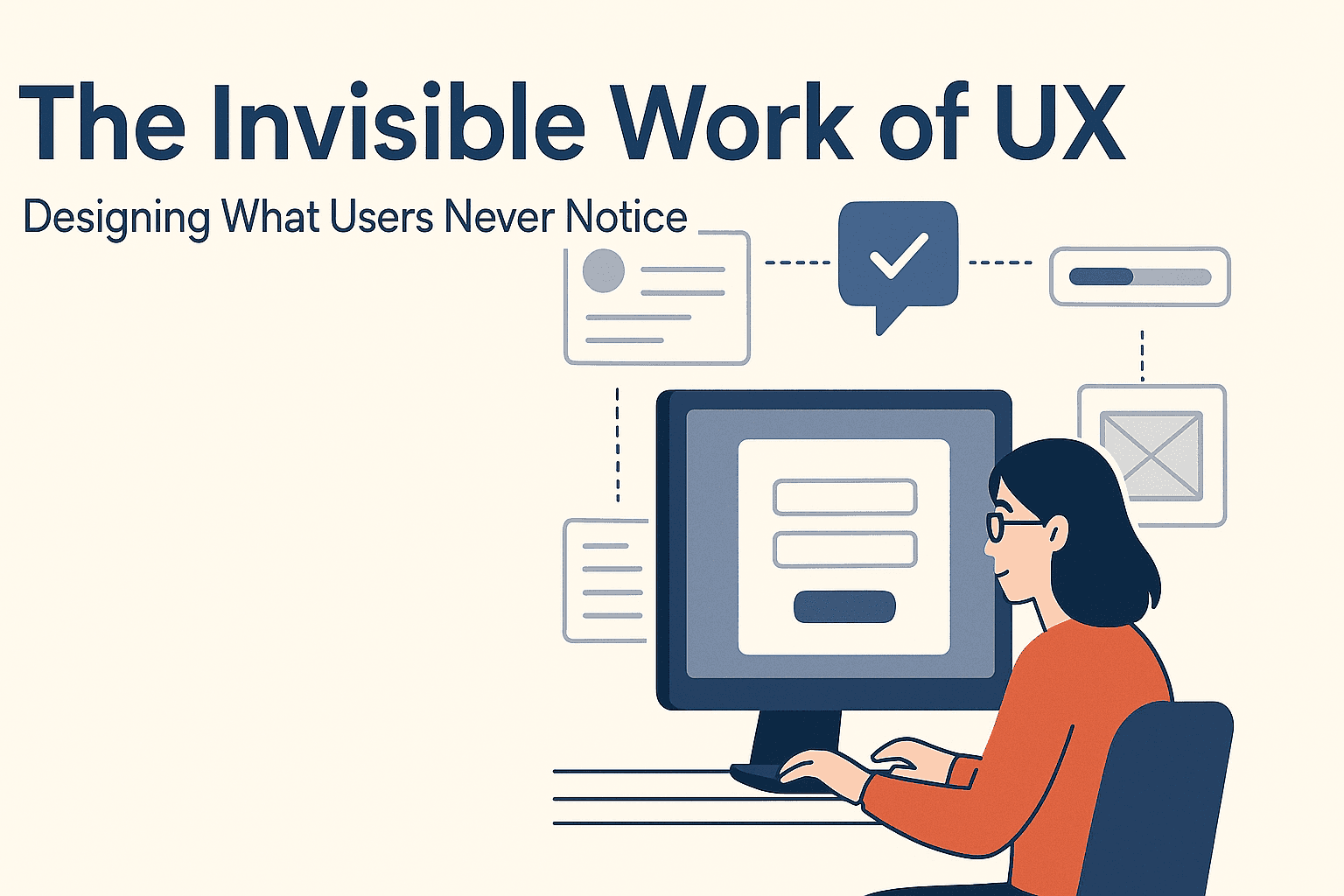
The Magic Lies in the Unseen
Every pixel, scroll, or click that feels “natural” is the result of dozens of small, deliberate decisions. Designers debate spacing, test button labels, and tweak flows, not for decoration, but to make interaction disappear.
Think about it:
You never “notice” a form that auto-fills your details correctly.
You never “praise” a progress bar that subtly keeps you from abandoning checkout.
You don’t “appreciate” a content layout that lets you scan exactly what you need.
But if any of these elements fail; the friction becomes obvious.
That’s the invisible side of UX: when silence means success.
Micro-Decisions, Macro Impact
Let’s take a simple example, a login screen.
Two fields, a button, maybe a “forgot password” link. Nothing fancy.
But behind that screen, a designer has to decide:
Should “Forgot Password” appear before or after the button?
Should we show an error as the user types or after they press “Submit”?
Should the password field have a visibility toggle?
What’s the ideal delay for showing a success checkmark animation?
Each of these micro-decisions shapes how confident and comfortable the user feels.
None of them scream for attention but together, they define the experience.
Designing for Emotion, Not Just Action
Invisible UX isn’t only about usability, it’s also about emotion.
Users form impressions within milliseconds. A slight delay, a jarring transition, or inconsistent tone can cause subtle distrust, even if the user can’t pinpoint why.
For instance:
A smooth fade-in when a new page loads creates a sense of calm.
A gentle bounce on a button makes the interface feel friendly.
A consistent microcopy tone (“You’re all set!” vs “Success”) builds warmth.
You don’t consciously think, “That was a pleasant button animation.”
But you subconsciously feel that the product is thoughtful and well-made.